Monday, May 11, 2015

Remembering My Mother on Mother's Day, 2015

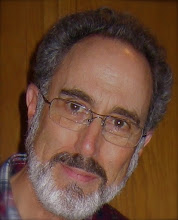
My mother, Nella, Mother's Day 2005
My mother, Nella, never explained, to me at least, her ambition to become a ballet dancer and later, an actress. I’ve often asked myself how it was that a girl crippled at youth and condemned by her doctors to wearing steel leg braces, would dream of dancing. But maybe it is natural. We wingless humans dream of flying.

In any case, Nella had been crippled with rickets as a young girl in Italy. Doctors at the time declared that Nella would have to wear steel leg braces for the rest of life. Her mother, Cesira, wouldn’t have it, and placed Nella with the nuns at a sanatorium, probably in Montecatini. I’ve written about this elsewhere.


Nella, age 12, walked unaided off the boat at Ellis Island in 1915 and started a new life in America, in Chicago, “hog butcher for the world,” where her father, Ugo, worked for a time at a cattle and hog butchering factory.

After he’d washed the blood and offal off his boots, Ugo would take Nella to the Chicago Civic Opera house, which was ten blocks north and west of where they lived on South State Street. My mother said they stood in the back of the balcony and Ugo would whisper to his star-struck daughter about what was happening in the story. Nella remembered getting goose bumps as she’d listen to the tenors perform their arias. Maybe Nella saw Ana Pavlova, the famous Russian ballerina, dance at the Civic Opera House, or somewhere there in Chicago, during those heady years. Maybe that was her inspiration.

Pavlova was a marvel of her time. But Pavlova was more than a great dancer. She was a determined person who willed herself to succeed at ballet, as classical ballet did not come easily to her. Her arched feet, thin ankles, and long limbs seemed unsuited to ballet dance, where a small, strong, and compact body was favored for the ballerina at the time. Her fellow students made fun of her with nicknames like The Broom and La petite sauvage. Undeterred, Pavlova simply worked harder than her rivals.


This determination and strong will was a hallmark of Nella’s personality. I’m convinced she ultimately walked not because the nuns had her move through the mineral waters of the spa, or because they buried her legs in warm sand, but because Nella simply decided she would walk and kept trying until she did.

When she started school in Chicago knowing only these words of English, “I doan stan English,” her fellow students made fun of her. Nella never backed down, and even became the defender of another girl who was constantly picking fights and then running to Nella for protection.

Nella learned to read and write English in record time and throughout her life never stopped trying to improve herself through night school and self-study. After completing secondary school, she went on to business school and her native intelligence and education were immensely useful ultimately when she became, in essence, my father’s office manager. I’m convinced my father’s flower shop, despite having an extraordinary clientele of wealthy Beverly Hills bankers, doctors, and actors (who weren’t always eager to pay their bills) would have floundered if not for Nella’s sensible, tough direction.
I believe Nella decided to go to California to pursue a Hollywood career. Here again, I don't know for sure. But why else? People came from all over the world went to Hollywood to seek fame and fortune, including Rudolph Valentino, who immigrated to America from Italy. Whatever the case, Nella gave her Hollywood aspirations a fair chance before deciding on another direction for her life.

Once Nella decided to marry Steve and bear his children, she did all she could to be the best wife and mother she could be. She did this despite her own mother being a poor example, essentially having abandoned her to a neglectful aunt when she was growing up in Italy. I remember finding the books my mother used to read to learn about taking care of infants and raising children. These things didn’t come naturally to her, yet she was determined, as always.

She handled all the feedings, the changings and cleanings, the special diets, the doctors’ appointments, and the dolling out of medicine. She kept baby books on my brother, Ronald and I, “Our Baby’s First Seven Years.” It contained time and date of birth, length and weight at birth, the baby’s condition (blue? – “no”), and lots of other data, including the “number, consistency, and color of stools.” Mom kept up the baby books up for several years and made notes in her neat, flowing handwriting; “Will not eat soft boiled eggs.”


She also sat my brother and I down one day in perhaps my tenth or eleventh year and told us about the birds and the bees. Nella used a book for that, which, if memory serves me, was titled, “The Birds and the Bees.” I don’t know if my brother grasped the significance of that lesson (he was three years older than I) there on the couch in our living room at 347 Parkman Avenue. I didn’t. But it did seem significant to me that this was a subject that women knew a lot more about that men. I haven’t changed my mind about that all these many years later.

My mother would tell me, "You can do anything you set your mind to." I knew she was right, because I knew how important her determination and strength of character had been in her life. Whatever I've achieved in life is almost certainly because my mother convinced me of that.

Tuesday, May 5, 2015

Spring

Wendell Berry

A shower like a little song
Overtook him going home,
Wet his shoulders, and went on.

Friday, May 1, 2015

The Telling Stone

Scottish Coronation Stone
Maureen Doyle McQuerry’s second novel in the Time Out of Time series, The Telling Stone, leaps right into a cataclysmic battle for the Travelers Market. Timothy James Maxwell, the young hero of the first book in the series, Beyond the Door, is joined by the forces of Light against the forces of Dark, led by Balor, of the Evil Eye, the mythic leader of the dark and demonic race of Formorians of Scottish lore. McQuerry’s description of the battle is filled with the cacophony and catastrophe of a combat waged by humans, monsters, shape-shifters, demons, and spirits, with Timothy, his sister, Sarah, and their friend Jessica, in the midst of the melee. It’s hard to imagine the author being able to maintain the excitement after such an explosive beginning. It’s a testament to her skill with the pulse and pacing of the story that she does just this, and then some.

McQuerry’s story is replete with Scottish and Celtic myth, as well as Scottish history and tradition, all woven together seamlessly in an exciting tale of exploration, adventure, and courage. Readers with the curiosity to do so, are provided sufficient clues to solve the riddle of the map that is to lead Timothy to a very old and revered stone that has disappeared -- the famous Scottish Coronation Stone, or Stone of Destiny. According to legend, the stone, Lia Fail, roars with joy when a rightful king places his feet on it. And thus the story gets it title, “The Telling Stone.”

Timothy, a nerdy 12-year-old obsessed with codes and cyphers, and an annoying prodigy at Scrabble, may be the hereditary Filidh, a special class of Celtic druid much revered by the people as a poet-seer, composer, councilor, diviner, and healer -- a Keeper of the Word, of wisdom, and of the truth. If Timothy is to be the Filidh, he must first find and step on the Telling Stone. The evil Balor, with his minions of the underworld, will do anything to stop Timothy. Failing that, Balor will use his wiles to corrupt Timothy, as he has done with a Filidh of the distant past.

Although Timothy is an extraordinary boy, he is still a human boy, subject to the frailties of any 12-year-old. He is vulnerable to self-doubt, to sudden changes of mood, to blandishments. At the same time he is bright, adventurous, and when the chips are down, remarkably courageous. He is a boy we can all relate to, and we do. And all through the story we hope against hope that Timothy and his companions will lead the forces of Light over the forces of the Dark. Balor is an ancient, odious, and powerful force. Is Timothy up to the challenge? Read this wonderfully engrossing and beautifully written book and you too, can become a Keeper of the Word.

Thursday, April 30, 2015

The Martian: A Novel

by Andy Weir
In his novel, The Martian, Andy Weir, reimagines Robinson Crusoe stranded on Mars, instead of some much more hospitable island in Earth's seas (and atmosphere). His protagonist's survival is unlikely, but Nick Watney is determined and resourceful. His struggles just to last the first few days after the storm that left him in this circumstance exemplify his courage and single-minded struggle to live, even though in the back of his mind he may think his long-term chances are hopeless.

The Martian is the first published novel by Weir. It was originally self-published in 2011 after which Crown Publishing purchased the rights and re-released it in 2014.

According to Wikipedia, having been rebuffed by literary agents when trying to get prior books published, Weir decided to put the book online in serial format one chapter at a time for free at his website. At the request of fans he made an Amazon Kindle version available through Amazon.com at 99 cents (the minimum he could set the price). The Kindle edition rose to the top of Amazon's list of best-selling science-fiction titles, where it sold 35,000 copies in three months, more than had previously downloaded it for free. This garnered the attention of publishers: Podium Publishing, an audiobook publisher, signed for the audiobook rights in January 2013. Weir sold the print rights to Crown in March 2013 for six figures.

The Ridley Scott directed film is scheduled to be released on November 25, 2015 in 3D, and stars Matt Damon and Jessica Chastain, with Michael Peña, Kristen Wiig and Jeff Daniels in supporting roles.

In other words, the dream scenario for all you self-published authors out there.

My opinion is that the story will make a better film than a novel, unless, like Andy Weir, you're "a lifelong space nerd and a devoted hobbyist of subjects like relativistic physics, orbital mechanics, and the history of manned spaceflight." This is not say I didn't enjoy the novel -- I did. But it is replete with technical detail on how to survive in Mar's harsh environment, and, at times, all this 'geeky stuff" became tedious. A picture is worth a thousand words, and that's what we'll see in the film.
Wadi Rum, Jordan, location for the filming of The Martian

Monday, April 27, 2015

Chinaberry

by James Stll
Edited by Silas House
From a review by Tom Eblen


Chinaberry is about the epic journey of an unnamed boy of 13, who often seems much younger. He leaves Alabama with family friends for a summer of picking cotton in Texas. During the next three months, his life is transformed.

"I think it's a love story on so many levels," House said. "It's a love story between the author and childhood, between a person and a place. I think there's a palpable love for Texas in the book, and for a way of life that's gone forever."

At the heart of the story is the relationship that develops between the boy and the Chinaberry ranch's owner, Anson Winters, and his second wife, Lurie. Anson virtually adopts the boy, treating him as a replacement for the young, handicapped son whose death he still grieves.

"What's so brilliant about the book is that (Still) doesn't make any judgments; it's a psychological thriller in a way," said House, who found some scenes almost creepy.

Thursday, April 16, 2015

Plum and Jaggers

by Susan Richards Shreve

PUBLISHERS WEEKLY REVIEW

Four young children are orphaned in 1974, when a terrorist bomb explodes on the Milan-Rome express train, in this touching novel about how families cope with violence and loss. The explosion occurs just after the elder McWilliamses leave their kids briefly to get lunch in the cafe car, which is the part of the train that's blown to bits. Dazed and frightened, Charlotte, Oliver and infant Julia cling to Sam, who, at age seven, is the oldest of the siblings. An Italian family cares for them until they're picked up by their kind but conservative grandfather, who--with their agoraphobic grandmother--raises them in Grand Rapids, Mich.

Though they love their new charges, the grandparents are distraught by the children's compulsive, secretive behavior, especially that of Sam, who, obsessed by his perceived responsibility to protect his family, becomes a loner with a bad reputation. After Sam is mistakenly blamed for the beating of a younger, handicapped boy, the family moves to Washington, D.C., where Sam shoplifts items to build a bomb shelter and is placed in a juvenile detention center. There, he conceives the idea for Plum & Jaggers, a comedy troupe eventually composed of his brother and sisters, whose bizarre scenarios transform with dark humor the tragedies of random violence and the ironies of modern life.

An accomplished author of adult (The Visiting Physician) and children's (The Formerly Great Alexander Family) fiction, Shreve reveals the orphans' creativity and self-destructiveness with balanced honesty, evoking her familiar themes of distrust and haunting memories. Best at sketches detailing individual quirks of the McWilliamses as they grow up, Shreve focuses more intensely throughout on the most disturbed, unstable and unusual character of Sam and leaves the other three siblings a bit sketchier. But through Sam's dark ebullience, Shreve traces the complexity of the family, including the spirits of the dead parents, offering a compassionate portrait of a courageous, troubled and resilient foursome.

Fram, by Steve Himmer

Oscar is a minor bureaucrat in the Bureau of Ice Prognostication, a secret government agency created during the heyday of the Cold War and still operating in the present without the public’s knowledge. Tasked with inventing discoveries and settlements in the Arctic, then creating the paperwork and digital records to “prove” their existence-preventing the inconvenience and expense of actual exploration-the job is the closest Oscar has come to his boyhood dream of being a polar explorer.

Fantasy becomes all too real when Oscar and his partner Alexi are sent on a secret mission to the actual Arctic, which brings them into a mysterious tangle of rival espionage that grows more dangerous the farther north they travel.

The trip also allows Oscar to reconnect with his wife, Julia, from whom he’s grown alienated by years of lying about what he does for a living (a distance compounded by Julia’s own secret government job), leading both of them to discover what can be lost if we let one part of ourselves—or one part of a story—distract us from everything else the world offers.