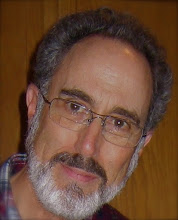
My experiences in Tehran, Iran, in October - November of 1978, served to inform my writing in Part III of my novel, The Lion and the Sun.
 |
| Newsweek Cover, November 20, 1978 Below: Front Pages of Tehran Newspapers in late October, 1978 |


I arrived at Tehran’s Maribad Airport on Wednesday, October 2nd at 10:30 pm, after a 16-hour flight from Dayton Ohio, with stops in JFK, London, and Frankfurt, Germany. The airport was dirty, crowded, and noisy, with a lot of shouting and gesturing. It seemed chaotic to me, but it was nothing compared to how it was five weeks later when I was trying to leave Iran.
Stone-faced soldiers were posted at all the entrances and exits. Passengers on our flight were directed to Customs, where agents, with soldiers looking over their shoulders, made a cursory check of passports and shot records. I was surprised when the agent didn’t my check bags, but just waved me through dismissively.
I was in Tehran to participate in something called “Peace Log;” a program sponsored by the US Military Assistance Advisory Group (MAAG) to train the Royal Iranian Air Force in the basics of logistics management. I was a Lieutenant Colonel in the Air Force assigned to the Air Force Institute of Technology (AFIT), School of Systems and Logistics. I was 40 years-old, married, with two children; boys 13 and 12. I was scheduled to be gone for 5 weeks; the second time in my tour at AFIT that I would be on temporary duty (TDY) for that long.
The other three members of my team had arrived in Tehran several days ahead of me, because I had been delayed in my departure from AFIT. I had been instructed to wear civilian clothes, and to wait for pick up by a MAAG detachment driver or members of my team. A “lessons learned” that we’d been provided advised strongly against any single individual from the team taking a taxi from the airport.
I went into the main terminal of the airport and dodged through the crowd searching out a detachment driver or member of my team. Failing to find one, I went outside the airport to check the cars arriving and departing the airport. I was approached immediately by a very scruffy-looking Iranian man asking me in Farsi if I needed a taxi. I answered in Farsi and English, shook my head, and finally just turned away from the persistent man, only to be approached a few minutes later by another man offering taxi service, and then another. I’d been instructed to wait for a team car, so I waited, constantly harassed by taxi drivers, or wanna-be taxi drivers, or kidnappers, or whatever the hell these, short, dark-skinned, mustachioed, insistent men were.
I waited 45 minutes, becoming more and more concerned about where my ride was. I worried about the soldiers who were posted along the airport drop off zone becoming suspicious about my “loitering.” Just as I was about to risk accepting a taxi ride, I spotted several tall guys wearing checkered sports coats loading their luggage into station wagon. I sidled over and heard them speaking American English. It turned out they were going to the same hotel where I’d be staying my first night -- the Evin -- and I was able to hitch a ride with them. They were US Navy personnel who were to be consultants to the Royal Iranian Navy.
We had an animated conversation as we drove out of the airport and on to the main highway into the city -- I don’t remember about what -- but conversation petered when we saw the large military presence along the highway. We passed by the Shahyad Monument, which had been built in 1971 to celebrate the rule of the Pahlavi Dynasty. Sandbags and artillery were positioned all around the the soaring, white stone monument.
Army personnel carriers were parked there, and soldiers with machine guns slung over their shoulders stood about watching the traffic flow by. This scene was repeated at strategic intersections and buildings along our route to the hotel. That was probably the point when I realized that the situation in Iran was more tenuous then our State Department had led us to believe.
The government declared martial law in Tehran and eleven other cities on the night of September 7-8, 1978. The next day, troops fired into a crowd of demonstrators at Tehran's Jaleh Square. A large number of protesters, certainly many more than the official figure of eighty-seven, were killed. The Jaleh Square shooting came to be known as "Black Friday."
 |
| We passed this at night on our way to the hotel from the airport. It was surrounded by troops and gun emplacements. |
The government declared martial law in Tehran and eleven other cities on the night of September 7-8, 1978. The next day, troops fired into a crowd of demonstrators at Tehran's Jaleh Square. A large number of protesters, certainly many more than the official figure of eighty-seven, were killed. The Jaleh Square shooting came to be known as "Black Friday."
 |
| I saw gun emplacements on most corners of the main streets during my assignment in Tehran. |