Showing posts with label novel. Show all posts

Sunday, December 4, 2016

Barkskins, by Annie Proulx

Barkskins, by Annie Proulx, "a tale of long-term, shortsighted greed whose subject could not be more important: the destruction of America's forests."

Annie Proulx's multi-generational story begins in 1693 with the colonization of "New France," the vast tract of north America and Canada colonized by the French between the 16th and 18th centuries. René Sel and Charles Duquet arrive in the new country as indentured servants to a harsh if not entirely brutal property owner and taskmaster, Monsieur Trépagny.

René and Charles, awestruck by the imposing, often impenetrable and seemingly limitless extent of the forest, react to it in strikingly different ways. René cleaves to his inner woodsman, shaping himself to the land, puzzled by the drive to cut further into the forest than necessary. Eventually, he marries Mari, a Mi’kmaq woman skilled in the therapeutic use of plants, enfolding her existing children with the couple’s own, and setting in train one of the novel’s key strands: the constant tension that their descendants feel as they negotiate their dual heritage.

The next 650 pages trace the bloodlines of these two men in an often grisly chronicle of deforestation, cultural erasure and international commerce. We sit in on vomit-strewn ocean crossings, shady business deals in Dutch coffee houses and fatal feuds between rival logging crews razing land wrested from the native population. The rags-to-riches rise of Duquet (always referred to by his surname) and the fortunes of his in-fighting heirs contrast with the fate of René’s mixed-race descendants, expropriated, exploited and scattered from New England to New Zealand in search of a livelihood.

As the book moves from generation to generation, a general thesis reveals itself: The concept of personal property, facilitated by technology and propelled by the Christian mandate for dominion, is largely to blame for the genocide of indigenous people and the impending ecological collapse.
________________________________
This review is drawn from several reviews, including by Rich Smith, The Stranger, William T Vollman, the New York Times, and Alex Clark and Anthony Cummins, The Guardian.

Saturday, September 5, 2015

Pretty Baby: A Novel, by May Kubica

Review by Bethanne Patrick


Mary Kubica's second novel, Pretty Baby, plays both with the timeline and with the notion of who is most harmed. Heidi Wood, a social worker, lives in downtown Chicago with her husband, Chris, and their bright but newly sullen 12-year-old daughter, Zoe. While commuting, Heidi notices a disheveled teenage girl toting a filthy, miserable baby. After seeing the pair more than once, Heidi approaches the girl — who gives her name as Willow Greer — and invites her to a local diner for a meal, ostensibly to discover whether the girl needs to go to a shelter.

We learn a lot about Heidi, Chris and Zoe in the first half of Pretty Baby, especially after Heidi invites Willow and baby Ruby to move in to their apartment. Chris travels a lot on business, but although a colleague is eager to get him into bed, he adores his wife and daughter — even when the latter tests her parents' nerves by shutting her mother and father out of her thoughts and room.

It's the perfect setup: Willow, seedy, suspicious and even scary (is that blood on her undershirt?), is going to worm her way into this family and destroy them. Will she steal all their valuables? Have an affair with Chris, who struggles to reconnect with Heidi after a serious health scare? Ruin Zoe's life and reputation? Heidi is so preoccupied with getting the sick baby well (it takes awhile for a doctor to diagnose a urinary tract infection, brought on by Ruby's dirty diaper) that she fails to consider most of the possible complications.

Kubica patiently constructs a tableau offering glimpses of Willow's before and after stories: She landed in a foster home with a dangerously abusive father figure — and, at some point, wound up in juvenile detention being questioned about murders (yes, plural). When and where did Willow give birth to Ruby? Who is Ruby's father? What does Willow want from the Wood family? When and how did she get taken to detention?

Most readers will get caught up in these questions as they watch Heidi try to take over all responsibility for Ruby's care. And when Chris engages a private detective to find out more about Willow, the story teeters on the edge of a climax in which one family's kindness is repaid with evil.
But Kubica has delicately misdirected our attention. I normally dislike endings that unspool quickly, seeing them as the result of fatigue or even laziness on the author's part, yet for Pretty Baby, the stage has been set while we were looking up toward the balcony. The fast-paced final chapters show us how easily we all ignore hidden infections in favor of surface wounds, and why "the ones you never hear about" may carry the deepest secrets.
___________________________________
My rating 3.5 / 5

Sunday, August 23, 2015

Art Imitates Life

The photos in this post are of the many Washington wildfires burning throughout the state. The narrative excerpts are from a wonderfully written novel I just finished reading last night, The Narrow Road to the Deep North, by Richard Flanagan. 

They found themselves driving into a strange night. Coming round a corner the black sky gave way to a huge, red wall of fire, perhaps half a mile away, flames rising far above them. This was a new fire, roaring up from a different direction, and it seemed to be joining several smaller fires into a single inferno. The noise of it was overwhelming.
Within minutes the fire front had caught up with them, and now he drove between walls of flame on either side, around burning tree limbs falling everywhere, past houses exploding. Past fallen wires and flaming car wrecks.
A fireball, the size of a trolley bus and as blue as gas flame, appeared as if by magic on the road and rolled towards them...tyres squealing on bubbling black bitumen, the noise only occasionally audible in the cacophony of flame roar and wind shriek, the weird machine gun-like crackling of branches above exploding.
...there was now nothing except smoking tin and ash and a naked chimney. Where Mrs. McHugh had been chopping down her fence to save her house, it was hard to know in the smoke where either had been.

Wednesday, July 22, 2015

Galore, by Michael Crummey

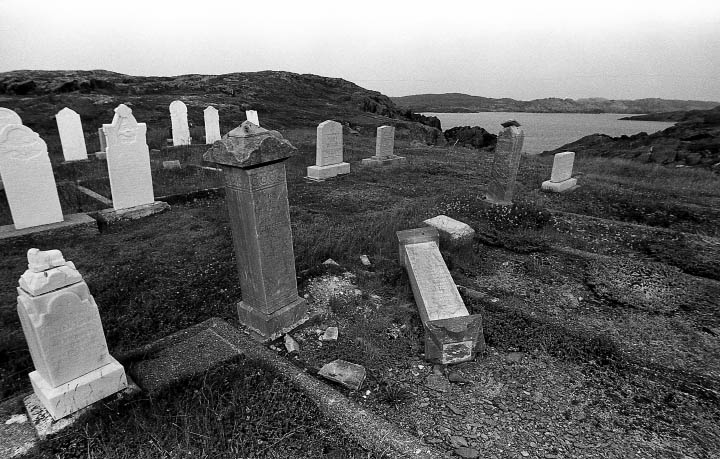
"The white underbelly was exposed where the carcass keeled to one side, the stomach's membrane floating free in the shallows...dirty seawater pouring from the gash they opened, a crest of blood, a school of undigested capelin and herring, and then the head appeared..."

Michael Crummey has, in his novel Galore (Doubleday, 2009) created a cast of characters too real to be fictitious. Then, just to show his hand at legerdemain, he throws into the mix a man cut from the belly of whale and another who dies only to reappear falling through the roof of his ex-wife's house. Indeed, Mr. Crummey, what sort of voyage are we on?!

It is a voyage of discovery, as all should be. Galore is another of Crummey's historical Newfoundland narratives full of families, fish, and fantasy woven into a rich fabric whose threads tie the reader to the land and its inhabitants. At times lyrical, at others matter of fact in the description of the islanders' poverty and want and their altogether tragic circumstances, Galore is a tale of lives lived, of a place and a time and of love and loss.

Galore’s tales are told from the perspective of people who live in the ‘real’ world but who experience a different reality from the one we call objective. The ghost in Galore is not a fantasy or superstition, but a manifestation of the reality of people who believe in and have "real" experiences of Mr. Gallery; people who walk along the Tolt Road with him, and sit at the hearth with him and discuss what is to be done -- him dead all those years.

Then there is the Widow Devine -- "Her Christian name passed out of use in the decades after her husband was buried and only a handful could even remember what it was" -- who seems invested with supernatural powers. Granted, we see nothing explicit to convince us that she is responsible for the cures or the curses attributed to her, but there are too many 'coincidences.'

Most of Newfoundland was settled almost exclusively by people from a small corner of south-eastern Ireland and another small corner of south-western England. They universally lead a mean existence but despite their common deprivations, manage to retain their religious affiliations and animosities. They may be in the same boat literally and figuratively, but when the fog rolls in and the wind howls like a banshee, and the Grand Banks seem haunted more by the spirits of the dead than by the cod upon which these mendicants of nature depend, then the fishermen pray to their own god, and once back on shore, they build their own churches and burn down their neighbors'.

What makes Crummey's novels about Newfoundlanders (he has written three) so compelling is his clear connection to the land and its people, and his obvious empathy, even distress, in seeing their deprivations, and the depredations visited upon them by both man and nature. Those mean circumstances continue to this day; the cod is gone, and "now the once" the oil will be gone, too. And the people of Newfoundland will be back where they started. Just as the characters and their stories are in this captivating novel.

Tuesday, July 7, 2015

"14," by Peter Clines

Peter Clines novel, "14," tells the story of seven initially clueless building tenants who discover that their building is a machine disguised as an apartment building and they are just part of the disguise. The machine has been designed and built to protect the world from alien monsters, who hover just out of dimension, waiting to eat everyone. It sounds stupid, and on reflection, it is, but there's fun to be had while reading the 446-page thriller.

Friday, January 9, 2015

The Ploughmen, by Kim Zupan

Storm on Montana Wheat (Giovanni Gervasi)
Valentine Millimaki, a sheriff's deputy in central Montana, is the officer who's called upon whenever someone goes missing. In the past, he has found people either safe or clinging to life, if barely. But for over a year, he's only found corpses, dead of exposure or suicide or murder. "Valentine Millimaki did not bring back angels," writes novelist Kim Zupan in The Ploughmen.

Millimaki's is assigned to a new detail: the night shift at the jail, where a hardened killer named John Gload is being held awaiting trial. Now the job is coming close to costing him his sanity and his marriage. Millimaki and the murderer forge an uneasy relationship.

Reviewers compare Zupan's prose favorably to Cormack McCarthy, and there is a similarity in the flow and imagery. The writing is self-assured and beautiful, but it lacks the depth and profundity of McCarthy.

Zupan's novel begins with a scene from Millimaki's childhood. He sees a note in his family's kitchen, written by his mother and intended for his father. "Darling — Come alone to the shed," it reads. The young boy takes an apple from the table, walks to the shed, and finds his mother hanging from a noose. Later, Gload will confide in the deputy that he also lost his father at a young age; he was caught in a snowstorm, frozen to death before he could find help.

Both men suffer from insomnia, both have troubled relationships. But there aren't many other similarities between the two. While Millimaki dedicates his life to saving the living, or, when he can't, recovering their bodies, Gload has dedicated his to murder — killing people and selling their belongings. When Gload starts engaging Millimaki in long conversations at night, the killer in his cell and the deputy outside, Millimaki is too enervated to resist.

The Ploughmen is a remarkable novel, beautifully executed and dark as pitch. It's almost hard to believe that it's a debut — Zupan is a carpentry teacher who has previously worked as a fisherman and rodeo rider. He grew up in central Montana, and it's clear he knows the landscape well. His descriptions of the country are stunning: "It was dark among the trees ... the snow lay deep and untrammeled, lit softly blue from the quarter moon and the stars swarming in the cloudless vault above the peaks."

He's equally gifted at considering the uneasy relationship that lies at the novel's core. There's no logical reason that a young straight-laced sheriff's deputy and an elderly killer would confide in each other, develop something approaching a friendship. Unless there is: In a sparse, barely populated part of the country, maybe there aren't many other options. "It's hard to be alone," thinks Millimaki at one point. "In this country, it's just hard to be alone."

The Ploughmen is an intensely Western novel, and it's absolutely beautiful, from its tragic opening scene to its tough, necessary end. Zupan is an unsparing writer, but also a generous, deeply compassionate one, and the relationship between Millimaki and Gload is one of the most troubling in recent American fiction.

From a review by Michael Schaub, for NPR

Friday, January 2, 2015

Tigerman: A Novel, by Nick Harkaway

"On the steps of the old mission house, the sergeant sat with the boy who called himself Robin, and watched a pigeon being swallowed by a pelican." So begins the novel, Tigerman, by Nick Harkaway that pretty much defies categorization. io9 calls it "existential pulp," comparing it to comic book fiction, but with serious questions about "existence and personhood." The Independent calls the novel, "post-pulp." Harkaway himself says of his novels, "My books are hard to categorise: they have elements of the fantastical, so they often do end up on the science fiction shelves, which is like parking a skidoo among motorbikes: sort of makes sense, but not a perfect fit."

As Jason Sheehan writes for NPR, Tigerman is the story of Sergeant Lester Ferris — a British soldier who has "seen too many wars in too many places," and is now approaching an uneventful retirement babysitting the brevet-consul position of the doomed island of Mancreu. The island, like so much of Harkaway's book, is imaginary.
Due to past ecological insults visited on the island by greedy corporations, unnamed but familiar, Mancreu now occasionally belches clouds of toxic waste, and is thus due to be cleansed any day now by fire and high explosives, courtesy of a panicked international community, fearful that the rest of the world will be somehow 'infected' by the island's inflected disease. One is reminded of global warming, except the world doesn't seem to be paying attention.

As the story unfolds, Mancreu exists in a sort of legal limbo. No one wants it, so no one rules it, and anarchy prevails. Mancreu has become home to the sorts of characters who seek out lawless places. The 'Bay of the Cupped Hands' has filled up with the Black Fleet — a dangerous if motley collection of intelligence posts, gun boats, illicit hospital ships, drug labs, torture centers and money laundries — and the bars with journalists and spies. Lester, because as the sole remaining representative of the U.K. government's former colonial apparatus, he has been ordered very clearly to not care about any of it, turn a blind eye, mark time, and for God's sake, don't give any interviews to the Press.

But the Sergeant isn't the sort of man to watch as dogs are kidnapped, fish are stolen, drugs are stockpiled, and most of all, a street kid is in danger of being orphaned, if he's not already, and thrown to the mercies of the global refugee debacle.

This boy, who Lester sees as possibly the son he never had, sees himself as Robin to Lester's Batman, or any superhero will do. And the boy, who gauges everything by levels of awesome, ultimately convinces Lester, at a certain point, to become a superhero called Tigerman, and to right wrongs, large and small. Lester goes along with it because he loves the boy, although he will not use that word, worries over the boy, indeed, saves the boy as mysterious evil-doers viciously gun down their friend, a barkeep, with his fingers possibly in nefarious doings.

Mancreu is, of course, a microcosm of all man's petty lusts and foibles. Harkaway's prose are especially telling when he writes along these lines. When describing an initial conversation the sergeant has with the former British Consul to Mancreu, for example, the man warns Lester not to answer the phone. "By the time it rings, the situation is fucked up beyond all retrieval anyway." He then compares Mancreu to Iraq, saying, "Should have had a better bloody plan in the first place. Should have said what we said we were doing in Afghanistan and left Iraq alone." Harkaway then has him say, "Conduct oneself with a bit of dignity and don't let the local staff get murdered. Avoid the sexual torture of prisoners, that's always a good one." Yes, indeed that's a good one.

As Sheehan writes, "for all the strangeness that lives in Tigerman, Harkaway never loses his grip." What is strange is necessary and just right and altogether enchanting and awful. The sergeant is always a soldier and too old to play superhero even when he is Tigerman. And you are, of course, pulling for the boy and the sergeant and the sergeant's dream of saving the boy and having a son and when the story ends you can not be disappointed, because it ends as it has to.

Thursday, December 18, 2014

The Lion and the Sun -- Christmas 1994

“Are you with me, Dan?”
Conte turned and looked at Scigliasi, who was looking at Conte with his head tilted to one side and a slight scowl on his face.
“What?”
“I said, you need to read this.” He handed Conte a brown envelope. “Eyes only. Reseal it when you’re through, will you?” Scigliasi tossed Conte a roll of heavy paper tape, then walked over to a desk in the corner, sat, and started sorting through papers.
Conte tore open the envelope. There was another envelope in it marked with an If lost, return to stamp, with a name Conte didn’t recognize written on the line. He opened the inner envelope and took out a cable with a TOP SECRET//COMINT cover sheet. The document itself had other caveats and restrictions on distribution, including UMBRA -- the blackest part of the shadow, where absolutely no light penetrated. Conte rested his backside against the table and read.

Subject: Russian Agent Planned Defection
Summary: A Russian intelligence service agent, code name, Tetris, contacted a United States intelligence officer and stated a desire to defect to the U.S. Tetris is a known SVR officer with a long history of working some of Russia’s highest priority operations, including the recent joint operation with U.S. special forces to recover a Russian plutonium pit that found its way into terrorist hands in Iran. Bonafides provided check out. Tetris has placed certain demands on his defection, including specifying who will bring him into US hands. Tetris’s current situation is tenuous, as he is being pursued by the Russian FSB and has been unable to leave the country. The DCI requests immediate action to extract Tetris and acquire this high-value target.

Conte skimmed the rest of the document, looked over at Scigliasi. He was watching Conte now. Conte held up the document. “You’ve seen this?”
“Yeah,” he said dismissively. “No secret who it is, or who he wants to bring him in from the cold.”
Conte tossed the document on the table. “Shit.”
Scigliasi walked over and began repackaging the document.
“Oh, sorry.” Conte handed him back the tape.
“Look, Dan, I don’t think you’re in any shape to do this. I told Corbin Bishop that. He said that Bala… Tetris is a dead man if we don’t get him out now, and thinks that if you’re well enough to travel over here, you’re well enough to go the extra mile to pick up Tetris. But you know, you can just say no.”
“And then what?”
“They’ll find someone else that’s acceptable.”
“You think so?”
“It doesn’t matter what I think, but it doesn’t have to be your problem.”
Conte sat back down, raised his one good arm, and rubbed his forehead. Balakirev was counting on him to come and get him. He trusted Conte. And he’d made sure that Conte owed him. The tape had saved Conte’s ass. Then again, who set up Kaitlyn? He’d asked that question twice now and no one seemed to know.
Conte looked up at Scigliasi. “What’s the drill?”
Scigliasi walked back to the desk and picked up his briefcase. He put it on the table, entered the combination, and snapped the locks open. He took out an envelope and handed it to Conte. “Passport, identification papers, cover materials, itinerary, airline tickets, et cetera, et cetera. You’ve been through it all before.”
Conte fingered the envelope. Looked at Scigliasi and then down again.
Scigliasi shook his head. “You’re going to do it, aren’t you?” he asked, with a look of disbelief.
“I don’t know.” I don’t know.
Scigliasi sighed. “Well, you’ll need to read the plan here and give it back to me. The rest of the stuff you can take.”
Conte looked at the airline tickets. The flight left Vienna International the next day at 1117. He read the plan. It was a typical pickup operation. Dead drops, test runs, diversions, hand offs – tradecraft; the advanced course.


The Lion and the Sun, Published May 2013

Monday, August 19, 2013

The CIA Admits Role in Overthrow of Iran's Freely Elected Prime Minister -- But We Knew That!

The CIA has released documents which for the first time formally acknowledge its key role in the 1953 coup which ousted Iran's democratically elected Prime Minister, Mohammad Mossadeq.
CIA Documents Acknowledge its Role


Excerpt from The Lion and the Sun:

Conte remembered meeting Anatoly Balakirev for the first time at this reception. He wore the dark blue Parade uniform of a USSR Air Force officer, with epaulettes, a gold sash at the waist, and calf-high black leather boots. His chest was covered in medals, only a few of which Conte recognized, including medals for combat service, and for bravery. By comparison, Conte’s black Air Force mess dress uniform was drab, and Conte wore only a few medals, including the Air Force Cross, the Purple Heart, a National Defense Service Medal, and the Vietnam Service Medal.
Balakirev was direct with this new American, who seemed so sure of himself. The Russian blamed Britain and America for the overthrow of Iran’s elected Prime Minister, Mohammed Mosaddeq in 1953, claiming that the US was threatened by Mosaddeq’s plan to nationalize oil and acted accordingly.
Conte was very familiar with the CIA’s botched operation to overthrow Mosaddeq, but pointed out to Balakirev the Communist’s role in undermining Mosaddeq. Conte told Balakirev that he was sure the USSR was behind the Tudeh Party’s subversion. Balakirev countered that the USSR’s only interest in Iran was to aid a developing nation and create a future trading partner. This sparring was in reality cover for each trying to determine what the other was really up to in Tehran at that critical time in the Shah’s rule. But it was true. The seeds of discontent in Tehran today had been planted by the CIA and the British SIS in 1953, and before that, the occupying forces of the USSR in 1946.

Friday, May 24, 2013

A Perfect Read for Mother's Day

Gillian Flynn is pretty. She has a nice smile, big brown eyes and an open, friendly face. On closer examination, however, there’s something wrong about that smile, something sardonic. And her eyes look so directly and unblinkingly at the camera that one feels a challenge has been leveled. I think the challenge is, “Read this!” 

 “This” is Flynn’s debut novel, “Sharp Objects.” It’s a story that shreds the image of pretty little girls in bows and pigtails, women as the weaker sex, women as precious and vulnerable, women as we thought we knew them. Flynn’s women and girls are right out of the Brothers Grimm, or Bedlam, or Macbeth.

Where does this pretty young wife and mother, born in Kansas City, Missouri, raised by two apparently loving, intelligent parents derive the malice that permeates her book? How does a happily married mother and pet owner come up with this evil that coagulates on the pages of her book?

It is a mystery perhaps equal to that of “Sharp Objects,” a story of the murder of two young girls, whose bodies are discovered oddly preened and made up, but with most teeth having been pulled. The little town of Wind Gap, Missouri, an 11-hour drive south of Chicago, is abuzz with rumor and gossip, but it turns out that the good people of Wind Gap are prone to rumor and gossip anyway; it doesn’t take a couple of gruesome murders to set tongues flapping, but it’s a welcome diversion for people living in a community whose economy derives primarily from raising hogs and processing them into hams.

Flynn’s story is narrated by ‘Camille Preaker,’ a thirty-something woman learning her trade as a reporter at a third tier newspaper in Chicago. Her editor, presented as something of a cliche´ in Flynn’s book, learns of the murders in Wind Gap and knowing that his young reporter is originally from Wind Gap, asks her to go there and cover the story. He does so with some misgivings, because Camille is one troubled young woman. Camille suffered from a cutting disorder as a child growing up under the cloying care of her mother, Adora, the hog plant-owning matriarch of Wind Gap. Flynn’s Adora takes her place among literature’s most unforgettable mothers, making Sophie Portnoy seem nothing to complain about.

Camille retains her urge to inflict pain on herself and it is only through great determination and copious amounts of vodka and other alcoholic libations that she seems able to resist sharp objects and the urge to carve words into her flesh; wretched, queasy, spiteful, omen.

Returning to Wind Gap, Camille encounters her 13-year-old half sister, Amma, who also enjoys inflicting pain, but her urges are turned outward. Flynn’s portrayal of Camille’s experience getting to know her mother again, and her teen half-sister is frighteningly believable. We can’t help but utter under our breath, “Don’t do that,” but we know she will and we know bad things will happen, and we can’t wait to turn the page and read about them.

Wednesday, May 8, 2013

I have an idea for a new book

I have an idea for new book, one I think will make a good movie. It's about a person -- could be a man or a woman -- who is born a genius, and unlike some geniuses is also socially gifted. Our genius, let's call him/her Alex, is also unlike a lot of very smart people today, in that he/she is philanthropically inclined first and foremost; making a lot of money is not on his/her (oh, hell, let's make it a 'he') bucket list.

Alex starts school and his innate knowledge and intelligence prove to be way beyond what our conventional schools and teachers can improve upon (which, I realize, doesn't take much these days). He is placed in schools for the gifted and then other "special" schools (not Hogwarts), but to no avail. Alex is ultimately withdrawn from formal schooling and instead provided the freedom and wherewithal to seek his education wherever he chooses to find it.
Alex's quest for learning takes him to the far reaches of the globe; to the world's great libraries, it's churches, mosques, monasteries, and museums. Alex visited not only the great archaeological sites, such as Ephesus, where he walked the Street of the Curetes, but lesser known sites, as well. Sites devoted to ancient pagan gods, or astronomy, or healing.

During his travels, Alex participated in certain of the practices he observed or only read about. In Mongolia, he participated with the shamans in achieving altered states of consciousness. With the Inuit people of Eastern Siberia he achieved the ability of remote viewing, a technique they used to find game as they hunted far and wide across the frozen tundra. In central Mali he sat with Dogon sorcerers to learn their methods of healing and divination. Everywhere he went, Alex learned not just by study and observation, but by immersion.

When he returned home, Alex agreed to join his father in business. Alex's father had formed a medical devices company and although it wasn't making a lot of money, it had developed some promising technology. Of course Alex's genius leads to one technological advancement after another and the company begins to prosper. Alex donates most of his earnings to charity and does pro bono work in his off hours. When Alex's mother dies of incurable brain cancer, Alex takes the company in new directions, using stem cell research to attempt a cure for cancer. Along the way he develops cures for Alzheimer's and Parkinson's disease, among others, but the cancer cure remains illusive. Still, Alex's father and the company become one of the top Fortune 500 companies.

All this time, Alex has managed to keep a very low profile. His father is the face of the company. He announces the new discoveries and, at Alex's request, simply chalks it up to the company's "outstanding research team." And they do have an outstanding team, but it's due to Alex's genius that the breakthroughs occur.

'Big Pharma' companies make periodic raids on the company's staff, and manage to steal away a few minor scientists, but due to Alex's charisma and his father's fairness in sharing the company's success with its employees, most people stay. Still, Alex is well aware that other companies, domestic and foreign, will attempt to steal his company's technology and its formulas. He develops an impenetrable firewall to prevent hacking, and an encryption system for blueprints and formulae, that only he, his father, and his wife know how to decode.

Alex's wife is an epidemiologist at the National Institutes of Health. He met her while traveling in Burundi, where she was dealing with an outbreak of typhoid fever. They have decided to postpone having a family until they feel the time is right in their work. Both are very dedicated to finding cures for some of the world's most devastating diseases.

When Alex's father dies in a hunting accident, Alex inherits the family's wealth and control of the company. Wealthy in his own right, Alex uses his inherited wealth to set up a charitable foundation, much like the Bill and Melinda Gates Foundation. He turns over the day-to-day running of the company to a trusted member of management, and devotes his time entirely to researching a cure for cancer. Alex's wife takes a leave of absence from the NIH when it appears that Alex is near a breakthrough and needs help setting up control tests.

Success! The control tests reveal that Alex has succeeding in developing a cure for cancer. Alex arranges an internal announcement for company employees. The whole team will be there to share in the joy of developing a cure for one of mankind's most intractable and heartbreaking diseases. The champagne is poured, Alex stands and asks for attention, he looks down and smiles at his wife, and that's when the gunfire erupts.

Everyone is killed by a few crazed gunmen with AR-15s they've converted to fully automatic. They are traced to an extremist religious organization that opposes stem cell research.

The world is shocked. Attempts are made to decode the files and learn the secret to curing cancer, but Alex did too good a job. Experts pronounce that the code will never be broken. The cure for cancer is lost.

Investigations determine the guns were obtained legally, at gun shows. Their conversion was illegal, but most experts claim that can't be controlled. There are calls for tougher gun control measures. The NRA makes a statement to the effect that it's a shame the liberal media and gun haters are attempting to use this tragedy to once again push their leftist liberal agenda. An attempt to craft a bipartisan bill closing the gun show loophole doesn't make it out of committee.

People continue to die of cancer, and gun violence.

Congress passes a law outlawing stem cell research.

The End


Saturday, November 3, 2012

From Black Irish -- a Novella


Brendan O'Malley began polishing the tarnished, pitted brass plate that he and Tino Orachetti had put up almost 40 years ago when they opened practice here on North Sepulveda Boulevard in Los Angeles. Orachetti died of prostate cancer 8 or 9 years ago and rather than changing the plaque, O’Malley just kept polishing it every year, trying unsuccessfully to remove the corrosive effect of LA’s toxic smog. He finished polishing, put the can and rag back in the sack, and went in his office.
Violet, his brother’s widow was already at work sorting through the folders of patients he was scheduled to see today. She’d glanced up when he came in but, concentrating on whatever the hell she was doing, she didn’t say good morning to him. He stood there glaring at her until she looked at him again, her graying eyebrows raised, which he took as impertinence, as if she was saying, What the hell do you want?

“What the hell are you doing here so early?” Dr. O’Malley growled.

Violet pushed her thin lips together in an exasperated frown and said, “Working, as usual.”

O’Malley hated it when Violet gave him these isn’t it obvious answers, like, eating my lunch, when he’d ask her what she was doing when she was eating her lunch at a time when he thought she should be writing one of his letters to the mayor, or the city council, or whatever politician he wanted to give some grief; not that it did any good, the useless sons of bitches.

O’Malley said, “If you can’t get your job done during normal working hours you should improve your efficiency.”

“Well, if you’d get the computer working so we could use the billing system I could be more efficient.”

“Darnell’s coming in later to work on it,” O’Malley said. He felt like sticking his tongue out at her, but just managed to restrain the impulse.
_________________________________
I wrote the novella, Black Irish, a couple of years ago and published it on Amazon.com. It loosely based on my brother-in-law and his last years working as a general practitioner in a seedy area, but not in Los Angeles. He struggled to make ends meet, but never gave up on all his Medicare/Medicaid patients, many of whom he'd had for years and years. He was as irascible as Brendan O'Malley, and as heroic.

Saturday, October 13, 2012

The Lion and the Sun: A novel that's more topical than ever


Iran and its nuclear ambitions seems to be constantly in the news. How close is this oil rich, bellicose, unpredictable nation from building a nuclear weapon? Is that its intent, or is its purpose strictly peaceful, as its leaders claim?

I spent five weeks in Tehran in 1978 as part of a US Military Assistance Advisory Group. I was fortunate to get out on one of the last US commercial flight to leave Mehrabad Airport. Subsequently, I worked at the International Atomic Energy Agency (IAEA) in Vienna, Austria, on nuclear safeguards, and followed that assignment up with work in the intelligence arena. After I retired, I wrote a novel, The Lion and the Sun, which drew upon that experience. The material in the novel comes from unclassified sources, but it is accurate in the way it paints the development of Iran's nuclear capabilities. Anyone who doubts Iran's real purpose will find that the tale told in this novel erases any doubt.
The Soviet Union’s house of cards finally came crashing down in 1991, sending the West near euphoria. Unfortunately, there were thousands of nuclear weapons stored in various locations in Russia and, as with the Russian ruble,  security at Russian weapons storage sites collapsed. The US spent hundreds of millions of dollars trying to shore it up. Despite its best efforts, something slipped through the cracks three years later; something that in the wrong hands, would put a great big crater in the middle of Manhattan.

Daniel Conte, a veteran of 25 years with a covert unit attached to the CIA, is getting old, he’s burned out, and he’s on the razor edge of being divorced. Conte has promised his wife he’ll participate in marriage counseling to get their troubled relationship back on track just in time for Christmas. But Conte is assigned the mission of tracking down the missing nuclear weapon component, and like the good soldier he is, he drops his domestic agenda and once again does the bidding of his CIA masters.

Conte’s mission takes him from Vienna, to Istanbul, to Tehran, where he’s in serious danger of returning home in a body bag. Along the way he reconnects with an old adversary from Russian intelligence, becomes involved with a beautiful MI6 agent, and comes up against a smart-mouthed Turkish intelligence intern who seeks advice from him on her love life.

Conte heads off on his globe trotting tour in November of 1994; just nine months after Aldrich Ames is revealed to be a Soviet mole in the CIA. The implications of Ames’ treachery will be felt by Daniel Conte in more ways than he can imagine as he puts his life at risk in the service of his country; ways that will challenge his core beliefs and test his courage and his values.

Tuesday, September 18, 2012

From The Lion and the Sun

From Chapter 6 of The Lion and the Sun
Conte waited for Kaitlyn on the platform at Heiligenstadt Wednesday morning, his arms wrapped around his shoulders to ward off the chill. He and Kaitlyn had arranged to visit the ancient monastery of Klosterneuburg in the Wienerwald. It was Kaitlyn’s idea to combine work with a pleasant outing. Unfortunately, the weather was chilly, overcast, and threatening rain. It matched his mood perfectly.
Conte thought about his meeting with Harold Wiggham the next day. He went over in his mind how much he would tell Wiggham about the missing Plutonium Pit. Certainly the US should continue to monitor the situation, as Conte wasn’t convinced that Balakirev was telling him the truth.
Conte also thought through yet again the prospects of recruiting Balakirev. The effort and cost involved in doing so would be worth it if he came over; Balakirev had a wealth of information about KGB tradecraft and details on the Russians’ transition of their intelligence services. Conte was fairly sure that the Russian also knew where some of the really scary skeletons were hidden in US intelligence closets. America was still losing agents; some right out of training. On the other hand, Balakirev continued to strike Conte as a dedicated and conscientious servant of Mother Russia. And he had a wife in Moscow that would have to be extracted along with Balakirev. What would it take to turn him?
Finally, Conte’s mind, or more accurately, his imagination returned to Kaitlyn. He was conflicted between professionalism and sexual longing; or was that all it was?
The rumble of the U-Bahn woke Conte from his reverie. He spotted Kaitlyn and watched her brisk, purposeful walk along the platform towards him. She was wearing a tan trench coat, closed at the waist with a belt, and she carried a huge handbag. Her heels clicked on the concrete. A smile formed on her lips as she approached. She looked gorgeous. Conte smiled back at her.
She walked right up to Conte and leaned forward to kiss him. He turned his head and kissed her on the cheek and again on the other cheek. Very European, but rather perfunctory.
“Hey,” she said, “You’re supposed to act like we’re lovers going on a holiday.”  
“Oh yeah? Who says? Maybe we’re just friends, or brother and sister.”
“Ha! With my peachy complexion and blond hair and your swarthy, Latin looks? Who’d believe it? Let’s get our cover story straight, Nathan.”
“Nathan?”
“The first of your kind we Brits hanged.”
The Schnelbahn pulled into the station with a whoosh, the doors slid open, and Conte and Kaitlyn boarded. Given the early hour and the lousy weather, it wasn’t surprising to find they had the car to themselves.
The train moved away from the station and Kaitlyn scooted over against Conte. “I’m cold,” she said with a shiver.
Conte offered to give her his scarf. She refused it. “You can put your arm around me, though.”
Conte slid his arm around her shoulder and she scrunched up closer. Looked up at him. “What’s your problem?”
“I don’t have a problem.”
“Well, you aren’t acting very friendly.”
“I’m just a bit preoccupied, Kaitlyn. I need to get to the bottom of things and I need your help doing it.”
“Okay. That’s my job.” She sat back from him. “You want to go over things now? Maybe if we get through this before we arrive at the monastery we can have a nice walk in the Vienna woods, look around the monastery, and eat a nice lunch at the Stiftkeller. A glass of wine might make you less grumpy.”
Conte’s head was killing him. Probably a result of the gluwein Anatoly bought the previous night. He wasn’t sure he wanted more wine. “Um hmm,” he mumbled.
“So how did your meeting go?” Kaitlyn asked.
“I’m not sure. Balakirev is playing both ends against the middle, but he doesn’t see it that way. I have a hard time believing he’d knowingly help supply Iran with the wherewithal to develop nuclear weapons, but the information given me by my people points to someone doing just that.”
Kaitlyn turned and looked out the window. “Balakirev’s been meeting with Demitri Protopopov on a fairly regular basis. Protopopov’s division is responsible for the Middle East. He’s been working out modifications to the safeguards agreement with Iran. Balakirev may be trying to influence that somehow.”
The IAEA’s safeguards regime was burdened by a Kafkaesque system of political agreements, regulations, endlessly negotiated inspection plans that limited what portions of a facility IAEA inspectors could view, and other bureaucratic red tape that belied the Agency’s message of “assurance” against diversion of nuclear material for weapons purposes.
“Well, Russia is practically frothing at the mouth over getting the contract to finish Bushehr. Maybe Anatoly is just trying to figure out what inspections are going to be permitted under the new facility attachment.”
Kaitlyn just murmured “Hmm.” Conte looked over at her. She turned to him, sensing his scrutiny. “Dan, our intelligence service has information that Balakirev’s company, AET, is funneling nuclear weapons equipment to Iran and believes that Balakirev is involved.”
“We know about AET, but our people don’t think Anatoly knows what’s going on. And I know something about the top guy at AET. He’s a former scientist who headed up one of Russia’s premier weapons labs and he’s got a good rep with us. We’re puzzled about the AET connection.”
The train slid into the Nordbruck station. Doors opened. A blast of cold air hit their feet. No one got on the car.
“Kaitlyn, do you think you can find out what Balakirev really knows about AET’s play in this thing? Are they supplying weapons components to Iran? Is Balakirev the go between? How are they doing it? They’ve gotta be using a front company. Who is it?”
Conte knew what the CIA had concluded, but he wanted independent corroboration. Kaitlyn was in a position to get it for him.
Kaitlyn looked at her hands. Conte could imagine what she was thinking. She was acting as Balakirev’s secretary. How was she supposed to pump him for information on such sensitive matters? She looked up at Conte. “Okay, Daniel. I’ll see what I can find out.”
Conte looked at her. She had beautiful eyes. He thought he could read the look there, but he didn’t want to acknowledge it then. He wanted to say ‘don’t take any chances,’ or ‘don’t put yourself at risk,’ or ‘forget it, don’t do what I just asked you to do,’ but he didn’t say anything. He told himself, She’s a professional; she can handle it.
#
The train pulled into Wiedling; the last stop before Klosterneuburg. A couple with two young children boarded the train and took seats at the far end of the car. The woman had her little girl by the hand and carried a string bag. One of those great European inventions that scrunches up into nothing, but expands to hold an entire picnic. Conte could see bread, cheese, apples. It was a good bet there was a bottle of wine somewhere.
The man carried his little boy aboard, bounced him in the crook of his arm, pointing out the window, watching the boys face. The woman smiled at her husband and down at her excited daughter. Kaitlyn watched them, a gentle smile on her face. The doors slid shut and the train moved down the track towards Klosterneuburg.
They were passing through open country, the Wienerwald to the left, the tall trees snaking upwards in neat rows, and the Danube to the right, its grey waters reflecting the overcast sky.
Kaitlyn was looking out the window. “This reminds me of the town where I grew up.”
“Where was that?”
“Fairford, in the Cotswold. Northwest of London. It’s just a tiny village. You wouldn’t have heard of it.”
“I’ve heard that the Cotswold is a beautiful area.”
“Yes.”
“Still have family there?”
“Me mum. And my uncle Pete and his family.”
“What about your dad?”
“Dead and gone.”
“Oh, I’m sorry.”
“Happened a long time ago. I was just a kid. But I remember him.” Kaitlyn paused, and then as if to herself she continued, “His feel, his smell, the sound of his voice; husky like.” She looked at Conte. “I felt happy when I was with him.”
“I’m sorry, Kate. What happened to him?”
“Killed in Belfast. He was Special Air Service, CRW. Went in on some black op. We never found out what. Only that something went wrong.”
“It’s a rotten business that way.”
The Special Air Service was the Brits principal special forces organization. It was one of the most elite military organizations in the world. And the Counter-Revolutionary Warfare unit, the CRW, pulled some of the most dangerous, most secretive, and in some cases, most controversial assignments of any military or intelligence organization.
“How did your mom handle your dad’s death; must have been awfully hard on her?”
“She was amazing. Sat me and my sis down and told us things would be okay. We’d make it. We’d work together, the three of us.” She paused. Looked at her hands. “Didn’t happen that way, though.”
“What happened?”
Kaitlyn dropped her head and rubbed the bridge of her nose. “My little sister took it hard. Got into drugs. Caused ma all kinds of grief. Then OD’d. Pete came by the house to tell mum. I can still see the look on her face.”
“Jesus, Katy.” Conte touched her shoulder.
“Yeah. My fault really. Should’ve paid her more attention. But she was into grunge and punk and all that shite and I was…” Kate did the quotation mark sign with her fingers. “…the good daughter. Truth is, my sister embarrassed me. So there it is.”
Conte wished he hadn’t been so nosy. “Kate, even when both parents are there to raise a child, things go wrong. Kids get it in their mind that they aren’t loved, or they’re different, or they’re just sad, and they do stupid things. You can’t blame yourself.”
“Yeah, well…” Tears had pooled in her eyes. She looked out the window. Let the phrase hang. “But my uncle was a saint. He helped us out. Helped me out. Got me into university. Found a spot for me after graduation in the firm. After that I made my own way.”
Conte studied Kaitlyn. “Remember that CT workshop we participated in years ago?
Kaitlyn smiled. “Counterterrorism? Yes. I had a bit of a crush on you.”
“Really?”
“It didn’t last,” Kaitlyn added, smiling.
#
The train pulled in to Klosterneuburg and Conte and Kaitlyn followed the family out and down the platform to the bus stop. The bus took only a few minutes to get up the hill and drop them at the Abby.
The dual towers of the abbey were in silhouette against a bank of high clouds; lit golden on top but dark, almost black underneath. Conte squinted up at the clouds. A vine of lighting snaked out and down towards the undulating vineyards.
They walked into a heaving wind past the Abby and on to the grotto and up behind it deeper into the woods. The beech trees were swaying and moaning as the last of their leaves were ripped from them. Wind-blown, the yellow and brown leaves skittered across and down the path in front of Conte and Kaitlyn.
The path branched back down towards the village and up again into the woods. There was a low rock wall along the side of the path. Beyond it, the woods climbed into darkness.
Conte climbed up. Kaitlyn followed him. The way was steep and as they turned into the woods towards a rock outcropping, Conte reached back to help Kaitlyn. Holding onto his hand tightly, she came up into his arms. Conte pulled her close and kissed her hard on the mouth.
Conte pushed Kaitlyn back against the rock outcropping. He undid her trench coat and reached inside pulling her hips against his.
“Yes,” she told him. “Yes.”
She had her hands around the back of his head. Now she moved them down and Conte felt her unzipping her slacks. Conte began working at his, but she took his hand and pushed it inside her slacks. He moved his hand down the smooth flesh of her stomach, down the mound, into the silken hair and then the wetness between her legs.
Conte heard Kaitlyn say things and felt her breath on his cheek, but everything was a blur. He stepped back and looked into her eyes. She remained with her back against the outcropping, foot braced against the rock, her white flesh exposed. Her eyes seemed more green than blue. Cat eyes. Her mouth was open.
Conte knelt in front of her, took her hips in his hands. Her hands found the back of his head. Her voice seemed far away. “Oh god, Danny.”
Conte rose to his feet and pressed against her. He felt her hand in his jeans, then she had his sex in her hand, and he was so hard it hurt as she guided him into her.

#

They leaned into each other waiting for their hearts to stop ramming against their chests. They heard talking. Two older women rounded the bend below them and walked on by, using their walking sticks and yakking in unison. Conte and Kaitlyn stood very quietly, pressed against each other.
Kaitlyn whispered in his ear. “If those alte frau had looked up and seen your bare behind. That cute, tight arse of yours, they would’ve been climbing up here after you, and I’d have to fight em off.”
She pushed him away. “Now turn around and give me some privacy. I want to get dressed and be taken to lunch. I’m starving!”
They pulled on their clothes and brushed each other off as best they could. As they made their way down the path towards the monastery Kaitlyn said, “We’ll eat in the keller. It’s dark there. Maybe they won’t notice the stupefied look on my face, or see the dirt on your knees.”

Friday, March 9, 2012

The Lion and the Sun -- An Excerpt

In this excerpt from the novel, The Lion and the Sun, Anatoly Balakirev, a Russian intelligence agent, who is working with Daniel Conte, an American intelligence agent, describes his meeting with the head of Iran's nuclear program. The action takes place in Tehran in 1994.


“So, Anatoly, you flew to Tehran Wednesday?”
“Late Wednesday night. We met with Director of Atomic Energy Research Division, Thursday morning, Dr. Nozar Aganazadeh. You know him?”
“I know of him. Never met the man. Who was with you?”
“Yousef Arbrogati and Wolfgang Hemming, the other two inspectors sent by Mr. Protopopov.”
“Just the three of you? I thought he was sending four inspectors.”
Balakirev waved a hand dismissively. “Malek Garlut came down with stomach flu and couldn’t make it. In any case, three was enough.”
Balakirev smiled. Conte knew Garlut. The team was better off without him.
Balakirev ran his fingers through his hair. He looked tired, but animated, and a little drunk. “Dr. Aganazadeh wanted to show that he was well connected with the Agency before getting down to business. He started by giving a little speech. I have committed to memory one of his most precious pronouncements.”
Balakirev stood straight and threw out his chest attempting, it appeared, to look directorial. “Gentlemen, let me just say, if you will, the Islamic Republic of Iran, has always condemned the possession of weapons of mass destruction. Our Islamic tents… Tents?”
“Tenets,” Conte said.
“Okay, ten-ents.” Balakirev put his hands out, palms up. “Then he says, our beliefs, and human affinity turn us away from such pursuits. When you have grown to know us better, you and your organization, you will see that our nuclear program is entirely peaceful. Inshallah.”
Conte laughed.
Balakirev momentarily basked in the glow of his own unreserved appreciation for his performance. Then he went on to describe his protracted negotiations with Aganazadeh over the team’s intention to inspect the Tehran Nuclear Research Center and the Jabr Ibn Hayan Multipurpose Laboratories located at TNRC -- laboratories that had not been declared by Iran.
Balakirev described the inspection that he and his team performed in the afternoon. “We examined the small research reactor originally supplied by the United States, I believe?”
He looked at Conte. Balakirev knew the answer, but was intent on making a point.
“Yeah, we put it in there in 1967,” Conte confirmed.
Balakirev smiled. “And you know it has been converted to burn 20 percent enriched uranium?”
“Yes.”
“And could produce up to 600 grams of plutonium per year in its spent fuel?”
“Yes, again.”
Balakirev gave Conte an ironic look. See what you did, he seemed to be implying.