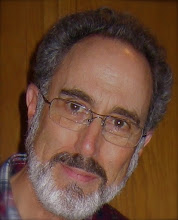
I am listening to opera arias as I work at editing my novel, The Lion and the Sun. Nessun Dorma came on, my eyes glazed over, and I had to stop reading and just listen. It is a beautiful aria and brings back beautiful memories.
I am listening to opera arias as I work at editing my novel, The Lion and the Sun. Nessun Dorma came on, my eyes glazed over, and I had to stop reading and just listen. It is a beautiful aria and brings back beautiful memories.

Uruhngnn chut chut sprnnghn
Chut chut sringrn kik kik kik
Shrung shrut shrut pinge enng
Shrut shrut sprnnghn kik grik
Vissi d’arte, vissi d’amore,
non feci mai male ad anima viva!
Con man furtiva
quante miserie conobbi aiutai.
Sempre con fè sincera
la mia preghiera
ai santi tabernacoli salì.
Sempre con fè sincera
diedi fiori agl’altar.
Nell’ora del dolore
perchè, perchè, Signore,
perchè me ne rimuneri così?
Diedi gioielli della Madonna al manto,
e diedi il canto agli astri, al ciel,
che ne ridean più belli.
Nell’ora del dolor
perchè, perchè, Signor,
ah, perchè me ne rimuneri così?

She is discrete, of course
More than that, quite proper
She sits alone at the small table
Sipping her Chartreuse cocktail
Yellow Chartreuse
Mixed with gin and orange juice
Poured over ice
She disdains the orange spiral
How infrequent her lonely outings
Or not lonely -- alone
Without her children in tow
Without her distant husband
The broad sidewalk
Is filled with people
She watches a couple
Walking hand-in-hand
She is shielded by the cafe's
Small cabinets de verdure
And by her own
Garden of Gethsemane
What will she say
When the man asks
If he may join her
"I am just about to leave?"
Or will she gesture
To the empty chair
And with the hint of a smile
Say, “Ah, mais, oui.”
She ponders this
Sitting at her small table
Looking in her glass
Only the ice is left

I am reading Christine Falls, by Benjamin Black, a pseudonym of John Banville, the Irish novelist and journalist. I read The Sea, by Banville, a year or so ago, and enjoyed Banville’s prose and found the story, a very personal introspective, intriguing. I don’t remember how I happened upon Christine Falls; I had written the title down on the back of an envelope, and I was surprised to find that Banville wrote under a pseudonym.
Whereas The Sea is literary fiction, and Christine Falls is crime fiction, the latter is equally literary and I found myself rereading excerpts of the book for the shear enjoyment of Black’s/Banville’s prose. Here is Black describing the entry of a nun, Sister Anselm, into the room where a couple is waiting, hoping to adopt a child from the convent’s orphanage. A short, square-shaped nun was approaching. There was something wrong with her right side, and she walked with a wrenching movement, dragging her hip after her like a mother dragging a stubborn child.

My novel, "The Lion and the Sun," had been rejected by prospective publishers and agents more times than I care to say before I gave up this first attempt to be a published author.
I began my quest with the thought that I'd written and had published many scientific and technical papers; why not fiction? Is there really that much difference?
Yes. There's a reason technical journals have a very limited readership -- the writing is, to put it mildly, dry.
One of the critiques I received of my manuscript, on those few occasions when I received anything more than, "Not for us," told me that it was clear I knew my subject, but I wrote as if I was preparing a report. No! When I tried to add "color," I was criticized for writing a "tour guide." When I wrote action sequences involving hand-to-hand combat, I was told that my description of the battle was "interminable." I was also informed by one cocky agent that he "didn't buy my premise." When an agent with little or no knowledge of the subject you're writing about tells you this, you've chosen the wrong agent. Choosing the right agent is a science and an art in itself.
I postponed my exciting debut. I decided that just as I'd spent more hours, days, and years than I care to mention learning my trade craft, I needed to spend more time (not as much, because I don't have that much) learning the craft of writing readable fiction. And I needed to discover the resources available to aspiring authors. It turns out there are lots and they are available on the web. There are links to some of them on this blog.
I've started writing short stories, flash fiction, and micro fiction and have been successful having some of the efforts published. But I've had a hard time putting my novel out of my mind. So finally, a few days ago I decided to revise and rewrite it; not for the first time -- this will be revision 38. But this is a major rewrite. I'm changing from first person point of view (POV) to 3rd person. I think I was reading a Jack Reacher novel (Reacher is a character invented by the author Lee Child) when I decided to write my first novel in the first person. Child does it so well. Maybe I thought it would be easy. People who are really good at their craft, authors, professional athletes, make things look easy not because they are easy, but because the people are so good at it, whatever it is, hitting a golf ball, writing a scene, imitating a British accent.
I think that when I wrote in the 1st POV, I let too much of who I am slip into the writing, or maybe I tried too hard to not let who I am intrude. I don't know, but on rereading the manuscript I felt that the character came across like a cardboard cutout with someone putting words in its mouth.
So here I am rewriting in the 3rd POV. It isn't easy. Every "I," and "my," and "me," changing to a first or last name, and "his," "him," "himself," all the while watching for dialogue, where the rules don't hold. Universal "find and replace" doesn't work. But I have to reread the manuscript anyway. My goal is to cut out at least 1/3 of the narrative. I want the novel to be under 100,000 words. It's hard. That description of the Italian meal my main character had in the charming little restaurant in Vienna was worthy of a gourmet magazine. "Be brutal," I tell myself. After all, my hero operates in a brutal world. He'll understand.

What if you thought you’d dedicated your life to preserving and protecting your country from its enemies, placing yourself in grave danger in the process, and watching your marriage disintegrate over the years, only to be accused of treason by the masters you serve?
Daniel Conte is a CIA field agent. He’s assigned the mission of tracking the whereabouts of a missing plutonium pit and determining the extent of Iran’s involvement in its disappearance from a Russian weapons lab. Conte has just returned from an overseas assignment, committed to marriage counseling with his wife. Instead, he heads back across the ocean on a quest that takes him first to Vienna, then Istanbul, and then Tehran, where a personal tragedy fifteen years ago still haunts him. Along the way he will come face-to-face with a shadowy group of terrorists that trace their heritage to the Assassins of Alamut. Conte’s mission will uncover repressed memories of past betrayals and lead to new ones that will challenge the very core of his beliefs in his mission, his country, and in himself.
The Lion and the Sun is a story of intrigue, betrayal, and regret set against the threat of nuclear terrorism. The story spans the years 1978 to 2008, although the main action takes place in 1994 during the rise of the Russian Federation from the ashes of the Former Soviet Union. For Daniel Conte, the only thing that changes over those thirty years is his marital status. In the rarified world in which he plies his trade, nothing else really changes. The Lion and the Sun is topical, compelling, and credible, and will appeal to readers who enjoy Alan Furst or Charles McCarry espionage novels.