Monday, November 16, 2015

Thursday, October 22, 2015
Today the World Went Mad

and I rolled over and went back to sleep
Pulling the pillow over my head
Either to block out the screaming
Or smother myself
I had a hard time breathing
the smoke was thick as blood
Bullets whined about my head
Like the hummingbirds we saw
At Bamfield on the Vancouver Coast
They whirled around giant stands of Fuchsia
Delicately probing the pink and purple bells
That hung by their feet from
What was left of the balustrade
Along the courthouse balcony
All had been beheaded
and the bodies looked like the
Sides of beef that hung from
Hooks in my Uncle Sal's slaughterhouse
Where I worked summers as a kid
I remember cleaning the floors of the
Blood, grease and offal that littered
the street between the destroyed buildings
Where snipers or siddigues with cell phones
Waited to kill us with a bullet or bomb
Someday I want to wake up without
Thinking I died and went to hell
and this constant buzzing in my head
Isn't the drill they used to relieve
the pressure on my brain
What was left of it
Saturday, September 5, 2015
Pretty Baby: A Novel, by May Kubica
Review by Bethanne Patrick

Mary Kubica's second novel, Pretty Baby, plays both with the timeline and with the notion of who is most harmed. Heidi Wood, a social worker, lives in downtown Chicago with her husband, Chris, and their bright but newly sullen 12-year-old daughter, Zoe. While commuting, Heidi notices a disheveled teenage girl toting a filthy, miserable baby. After seeing the pair more than once, Heidi approaches the girl — who gives her name as Willow Greer — and invites her to a local diner for a meal, ostensibly to discover whether the girl needs to go to a shelter.
We learn a lot about Heidi, Chris and Zoe in the first half of Pretty Baby, especially after Heidi invites Willow and baby Ruby to move in to their apartment. Chris travels a lot on business, but although a colleague is eager to get him into bed, he adores his wife and daughter — even when the latter tests her parents' nerves by shutting her mother and father out of her thoughts and room.
It's the perfect setup: Willow, seedy, suspicious and even scary (is that blood on her undershirt?), is going to worm her way into this family and destroy them. Will she steal all their valuables? Have an affair with Chris, who struggles to reconnect with Heidi after a serious health scare? Ruin Zoe's life and reputation? Heidi is so preoccupied with getting the sick baby well (it takes awhile for a doctor to diagnose a urinary tract infection, brought on by Ruby's dirty diaper) that she fails to consider most of the possible complications.
Kubica patiently constructs a tableau offering glimpses of Willow's before and after stories: She landed in a foster home with a dangerously abusive father figure — and, at some point, wound up in juvenile detention being questioned about murders (yes, plural). When and where did Willow give birth to Ruby? Who is Ruby's father? What does Willow want from the Wood family? When and how did she get taken to detention?
Most readers will get caught up in these questions as they watch Heidi try to take over all responsibility for Ruby's care. And when Chris engages a private detective to find out more about Willow, the story teeters on the edge of a climax in which one family's kindness is repaid with evil.
But Kubica has delicately misdirected our attention. I normally dislike endings that unspool quickly, seeing them as the result of fatigue or even laziness on the author's part, yet for Pretty Baby, the stage has been set while we were looking up toward the balcony. The fast-paced final chapters show us how easily we all ignore hidden infections in favor of surface wounds, and why "the ones you never hear about" may carry the deepest secrets.
___________________________________
My rating 3.5 / 5

Mary Kubica's second novel, Pretty Baby, plays both with the timeline and with the notion of who is most harmed. Heidi Wood, a social worker, lives in downtown Chicago with her husband, Chris, and their bright but newly sullen 12-year-old daughter, Zoe. While commuting, Heidi notices a disheveled teenage girl toting a filthy, miserable baby. After seeing the pair more than once, Heidi approaches the girl — who gives her name as Willow Greer — and invites her to a local diner for a meal, ostensibly to discover whether the girl needs to go to a shelter.
We learn a lot about Heidi, Chris and Zoe in the first half of Pretty Baby, especially after Heidi invites Willow and baby Ruby to move in to their apartment. Chris travels a lot on business, but although a colleague is eager to get him into bed, he adores his wife and daughter — even when the latter tests her parents' nerves by shutting her mother and father out of her thoughts and room.
It's the perfect setup: Willow, seedy, suspicious and even scary (is that blood on her undershirt?), is going to worm her way into this family and destroy them. Will she steal all their valuables? Have an affair with Chris, who struggles to reconnect with Heidi after a serious health scare? Ruin Zoe's life and reputation? Heidi is so preoccupied with getting the sick baby well (it takes awhile for a doctor to diagnose a urinary tract infection, brought on by Ruby's dirty diaper) that she fails to consider most of the possible complications.
Kubica patiently constructs a tableau offering glimpses of Willow's before and after stories: She landed in a foster home with a dangerously abusive father figure — and, at some point, wound up in juvenile detention being questioned about murders (yes, plural). When and where did Willow give birth to Ruby? Who is Ruby's father? What does Willow want from the Wood family? When and how did she get taken to detention?
Most readers will get caught up in these questions as they watch Heidi try to take over all responsibility for Ruby's care. And when Chris engages a private detective to find out more about Willow, the story teeters on the edge of a climax in which one family's kindness is repaid with evil.
But Kubica has delicately misdirected our attention. I normally dislike endings that unspool quickly, seeing them as the result of fatigue or even laziness on the author's part, yet for Pretty Baby, the stage has been set while we were looking up toward the balcony. The fast-paced final chapters show us how easily we all ignore hidden infections in favor of surface wounds, and why "the ones you never hear about" may carry the deepest secrets.
___________________________________
My rating 3.5 / 5
Sunday, August 23, 2015
Art Imitates Life
The photos in this post are of the many Washington wildfires burning throughout the state. The narrative excerpts are from a wonderfully written novel I just finished reading last night, The Narrow Road to the Deep North, by Richard Flanagan.
 They found themselves driving into a strange night. Coming round a corner the black sky gave way to a huge, red wall of fire, perhaps half a mile away, flames rising far above them. This was a new fire, roaring up from a different direction, and it seemed to be joining several smaller fires into a single inferno. The noise of it was overwhelming.
 Within minutes the fire front had caught up with them, and now he drove between walls of flame on either side, around burning tree limbs falling everywhere, past houses exploding. Past fallen wires and flaming car wrecks.
 A fireball, the size of a trolley bus and as blue as gas flame, appeared as if by magic on the road and rolled towards them...tyres squealing on bubbling black bitumen, the noise only occasionally audible in the cacophony of flame roar and wind shriek, the weird machine gun-like crackling of branches above exploding.
 ...there was now nothing except smoking tin and ash and a naked chimney. Where Mrs. McHugh had been chopping down her fence to save her house, it was hard to know in the smoke where either had been.


Wednesday, July 22, 2015
Galore, by Michael Crummey

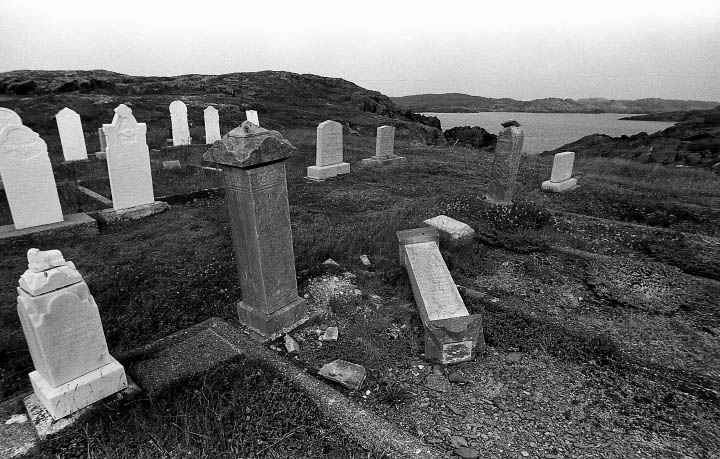
It is a voyage of discovery, as all should be. Galore is another of Crummey's historical Newfoundland narratives full of families, fish, and fantasy woven into a rich fabric whose threads tie the reader to the land and its inhabitants. At times lyrical, at others matter of fact in the description of the islanders' poverty and want and their altogether tragic circumstances, Galore is a tale of lives lived, of a place and a time and of love and loss.
Galore’s tales are told from the perspective of people who live in the ‘real’ world but who experience a different reality from the one we call objective. The ghost in Galore is not a fantasy or superstition, but a manifestation of the reality of people who believe in and have "real" experiences of Mr. Gallery; people who walk along the Tolt Road with him, and sit at the hearth with him and discuss what is to be done -- him dead all those years.
Then there is the Widow Devine -- "Her Christian name passed out of use in the decades after her husband was buried and only a handful could even remember what it was" -- who seems invested with supernatural powers. Granted, we see nothing explicit to convince us that she is responsible for the cures or the curses attributed to her, but there are too many 'coincidences.'
Most of Newfoundland was settled almost exclusively by people from a small corner of south-eastern Ireland and another small corner of south-western England. They universally lead a mean existence but despite their common deprivations, manage to retain their religious affiliations and animosities. They may be in the same boat literally and figuratively, but when the fog rolls in and the wind howls like a banshee, and the Grand Banks seem haunted more by the spirits of the dead than by the cod upon which these mendicants of nature depend, then the fishermen pray to their own god, and once back on shore, they build their own churches and burn down their neighbors'.
What makes Crummey's novels about Newfoundlanders (he has written three) so compelling is his clear connection to the land and its people, and his obvious empathy, even distress, in seeing their deprivations, and the depredations visited upon them by both man and nature. Those mean circumstances continue to this day; the cod is gone, and "now the once" the oil will be gone, too. And the people of Newfoundland will be back where they started. Just as the characters and their stories are in this captivating novel.
Thursday, July 9, 2015
Started Reading "Galore," by Michael Crummey

Devine's Widow tells Father Phelan, You'd be a half-decent priest if you gave up the drinking and whoring.
Half-decent, he said, wouldn't be worth the sacrifice.
Father Phelan was, of course, Catholic, and prior to 1784, the practice of the Catholic Religion was illegal in Newfoundland.
Tuesday, July 7, 2015
"14," by Peter Clines

Subscribe to:
Posts (Atom)