Tuesday, January 17, 2012

Will the real Republicans please stand up?


Why do Republicans devalue intelligence? Republicans use the word “intellectual” as a pejorative. One of Newt Gingrich’s attack ads directed at Mitt Romney mocks him for speaking French in talking about the 2002 Winter Olympics held in Salt Lake City, for which the official language was French. In fact, Gingrich once said about himself, "I'm not a natural leader. I'm too intellectual; I'm too abstract; I think too much” (1995).
Republican attack ads against Elizabeth Warren in the Massachusetts senatorial race pitting her against Scott Brown refer to her disparagingly as, “Professor Warren.” Michele Bachmann in criticizing Barack Obama, mockingly called him “professorial.” Obama was editor of the Harvard Law Review and taught Constitutional Law at the University of Chicago.
Rick Santorum has accused Obama of “intellectual snobbery,” because of Obama's emphasis on getting a college education.
Michael Steele, former head of the RNC, mocked Jon Huntsman speaking Mandarin during a Republican debate saying, “I thought he was ordering takeout.”
Herman Cain bragged about not knowing who the president of ‘Uzbeki-beki-stan” (Uzbekistan) was, and blew off his complete brain freeze on Libya.
For Republicans, being college educated makes you an “elitist.” They equate being an intellectual with being a socialist. In response, some clever entrepreneur created a tee shirt sporting this on the front, "If you can read this, you're a socialist."
Someone who approaches a complicated problem, like going to war in Iraq, and has the audacity to change their mind, is a “flip-flopper.” George W. Bush famously made his decision to invade Iraq based on his “gut.” Then, in the face of overwhelming evidence that his rationale for war was dead wrong, stuck to his guns.
Is it all just a ruse to appeal to what the Republicans may see as their “stupid demographic” -- the Christian fundamentalists, the conspiracy theorists, the southern redneck -- or is this what Republicans have truly become? If the former, then let them have their craven fun and beat the hell out of them at the polls. If the latter, then, quoting one of our supposed heros, we must say to them, You are pitiful, isolated individuals! You are bankrupts. Your role is played out. Go where you belong from now on—into the dustbin of history!

Monday, January 9, 2012

2012

Chapter 14: That was a good start
[Go to beginning]
Karl Rove found the morning news upsetting. The Wall Street Journal was reporting that  employers had stepped up hiring in December, and unemployment had fell to its lowest level in two years. Job growth before the 2012 elections was anathema to Republicans; it hurt their argument that Obama was mishandling the economy. Rove immediately called Reinze Priebus; damned RNC needs to stay on top of this jobs thing, he mumbled, as he waited for his call to be answered.
“Hello?” Priebus answered, wondering who was calling him at 6:30 in the friggin morning.
Reinze, Karl here. Listen, have you seen the Wall Street Journal article this morning on jobs growth?”
Priebus, leaning forward to look in his bathroom mirror, scrunched up his face in a frown. He had a pimple forming right in the middle of his forehead. “No,” he said.
“They’re reporting something like two hundred thousand jobs added in December,” Rove said, an edge of anger in his voice. “Do you realize what jobs growth, any jobs growth, is going to do to our chances in 2012?”
“Well,--” Priebus began.
Rove cut him off. “We need to take a two-pronged approach to cutting this job growth off  at the knees. Start ASAP with our Wall Street friends. If they want us to kill financial reform, they’re going to have to play ball on blunting this jobs growth thing. Then--”
“Wait a minute, Karl,” Priebus interrupted. “How does Wall Street blunt job growth?”
“Jesus, Reinze, think about it. Banks loan money for construction, don’t they? Venture capitalists buy into business start ups. All kinds of shit like that. Money, money, money, Reinze. Makes the world go around, remember?” Rove said.
“Ah, okay, yeah,” Priebus said. Rove had a way of insulting his intelligence that frosted his balls.
“Then we need to get with our big business contributors, the Koch brothers, our Texas contingent; Tillerson, Watson, those guys. Talk to API; the damned Petroleum Institute ought to be on board, for Christ’s sake,” Rove said, talking faster and more forcefully as he thought about it.
“What are we going to do, tell ‘em not to drill?” Priebus said, with a chuckle.
“Hell yes!” Rove answered. “They’ll get plenty of new leases when we elect a Republican president, and in the meantime, let’s see ‘em push gas prices up. That further depresses job growth. It’s all good,” Rove said.
“Okay, I’ll get on it,” Priebus said, without knowing exactly how.
“And while you’re at it, Reinze, talk to Boehner about any projects that our House members are pushing. Things like that Smart Grid project in Texas.”
“The 25th District,” Priebus said. “That’s Doggett. He’s sure as hell not gonna cooperate.”
“Well Doggett’s going to be out of a job as soon as C185 goes into effect,” Rove said. He was referring to the new redistricting plan that Governor Rick Perry had signed that gave the 25th a whole new geography. The Republican-controlled legislature had gerrymandered Texas congressional districts such that the growing minority vote was well diluted in predominantly Republican districts, with some districts taking on highly tortured shapes.
“We’ll see what happens in the Supreme Court,” Priebus said.
“Hey, George W took care of that for us,” Rove said. “The point is, find out which of Boehner’s House members have projects in their districts and have them put a hold on start up until after the election. We have got to do more to blunt job growth, Reinze,” Rove added.
“Well, we killed Obama’s jobs bill,” Priebus said.
“That was a good start,” Rove said, and ended the call.
____________________________________________________
This is a work of fiction. Names, characters, places, and incidents are the product of the author’s imagination, or are used fictitiously, and any similarity to actual persons, living or dead, is entirely coincidental.

Friday, December 23, 2011

2012

Chapter 13: Wish the Gipper were here
[Go to beginning]
“Bob? Hey, this is Karl. Rove. Yeah, fine, fine. Listen, what can we do to get that ad running on more local stations up there?” Karl Rove said, in a men’s room in Reagan National Airport, his voice bouncing around the tiled restroom. Rove had speed-dialed Maginn’s number and adjusted his Bluetooth device as he positioned himself at a urinal.

The sight of men talking to a wall in public restrooms had become so common that no one paid any attention.

Bob Maginn, was the new Chairman of the Massachusetts Republican Party, and Rove wanted to make sure he was on point for the Senate election between Scott Brown and Elizabeth Warren.

“Well, you know the ad is running, and we appreciate your PAC producing it and paying for airtime,” Maginn said.

“Yeah, but how about more airtime on that country station; what is it...?”

“WKLB,” Maginn said. “Well--”

“And boost the buy on talk radio, like WRKO,” Rove said. “And don’t worry about the money. We’ve got plenty.”

“Well, it’s not the money, so much. It’s just that we’re getting some push back about the nature of the ad,” Maginn said.

“What about it?” Rove said.

“Karl, the ad basically blames Warren for the TARP program, and everyone knows she’s on record as a strong advocate for financial reform. She actually criticized the Treasury for their handling of the--”

“Bob, Bob,” Rove tried to interrupt.

“...program when she was the Chair of the Congressional Oversight Committee. People aren’t buying it, and the radio stations don’t want their credibility damaged.”

Rove zipped his fly, grabbed his Roll-aboard, and exited the restroom talking. “People don’t know shit, Bob. I mean, come on. How many of those Bay Staters have a clue about what Warren really did in the government? Give me a break.”

“Yeah, well...,” Maginn said.

“We’re losing momentum as we speak, Bob,” Rove said.

“Yeah, okay, but we’ll need another infusion of cash, Karl. It helps to grease the skids on getting airtime, you know.”

“Yeah, money always helps radio station owners feel better about their credibility. Okay, no problem. And by the way, I suggested something to Buckley and haven’t heard anything back from him. Have him get in touch, will you?” Rove said, and ended the call.

Rove had suggested to the Massachusetts GOP’s Director of Communications, Tim Buckley, that he arrange for an anonymous direct mailing of something egregiously negative on Scott Brown, making it look like it came from Warren's campaign, and thereby making her campaign look bad. It was something Rove had done successfully in the past and this seemed a good time to try it again -- Warren had pulled slightly ahead of Brown in the latest polls.
Rove stood on the moving sidewalk and checked his BlackBerry for messages. Then he brought up Twitter and tweeted, “At #Reagan Int’l AP - wish the ‘Gipper’ were here.”

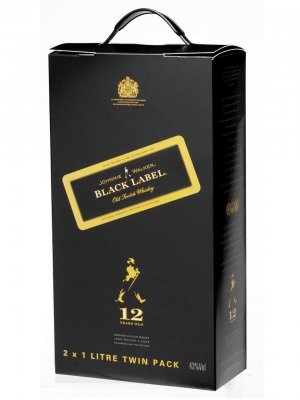
On the way to his boarding gate, Rove stopped at duty free and picked up two bottles of Johnnie Walker Black Label to give as a Christmas present to a ‘Bush Pioneer’ he planned to hit up for another contribution. He handed the checker a previously used ticket to London and his passport, paid in cash, and included a little extra. “Merry Christmas,” he said.


___________________________________________________________________
This is a work of fiction. Names, characters, places, and incidents are the product of the author’s imagination, or are used fictitiously, and any similarity to actual persons, living or dead, is entirely coincidental.

Wednesday, December 21, 2011

2012

The Ninety-Nine Percent Party
[Go to beginning]
Karl Rove rushed into the small meeting room and began to set things up for the meeting he had scheduled. Rove had been busy. His meeting with Buddy Roemer had set in motion the various actions needed to form the third party that Rove hoped would draw significant votes away from Obama in the 2012 Presidential Election. Rove had recruited a team of people to infiltrate the Occupy Wall Street movement and, having established their bone-fides, file the necessary paperwork and pay the fees required for third party registration.
Rove’s deep pockets donors had ponied up all the money needed to pay Rove’s infiltration team, pay filing fees, and pay for getting people registered in the new party. This would take a lot of door-to-door, and shopping mall-to-shopping mall legwork and Rove already had people out doing it. It was all about money, and Rove had more ‘Bush Pioneers’ ready, willing, and able to contribute. In addition, Rove had already drafted a party platform and it was in Buddy Roemer’s hands for review. Rove had stressed to Roemer that the draft be kept “Close hold -- your eyes only.”
Rove was spending the morning conducting a brainstorming session with a few of his confidants to come up with a name for the new party. The meeting participants straggled in carrying cups of Starbuck's coffee. It was a good thing, because Rove hadn't had time to arrange 'refreshments.'

Rove thanked everyone for coming and then said, "Grab a seat anywhere. Let's get right into this. I have another meeting this morning."

Rove explained the rules for brainstorming, which he felt anyone used to this sort of exercise should know, but still. After a little prompting, ideas started to come fast and furious. Some of the participants seemed to get carried away proposing names like, America’s Party, Patriot Party, and so on, forgetting apparently, that the Occupy Wall Street party, whatever they called it, had to have a socialist flavor.

The idea was to de-emphasize traditional American entrepreneurial values. Rove had stopped writing proposed names on the electronic white board and reiterated the theme he was after. Finally this sunk in and the group started coming up with more appropriate names, like Citizen’s Party, American Socialist Party, People’s Party, Worker’s Party, and Labor Party, all of which, Rove had to point out, had already been used at one time or another.
One of the participants said, “We could name the party after an animal, like the Bull Moose Party.”
“Yeah, only we should call it the Bull Shit Party, said another man, whom Rove had brought in from the DCI Group. This guy was named John Murphy. Rove called him, ‘Murph,’ a tendency to use a shortened version of a person’s last name that he’d picked up from George W. Bush. Murph had a perpetual smirk on his face that along with his comb-over hair made him look like a standup comedian. But he was about as funny as a heart attack. He was meeting with Rove after the brainstorming session to discuss the ‘metrics’ that Rove was seeking on congressional house and senate elections.
“The name, Bull Moose Party, was just a kind of catch phrase used for Teddy Roosevelt’s Progressive Party,” Rove said. “But coming up with a name like that isn’t a bad idea.”
“What about just calling it the Occupy Party?” one of brainstormers suggested.
“Sounds like we’re talking about American troops in Iraq,” Chris Burgess said.
Rove frowned, despite his explanation of how brainstorming was supposed to work, no one could refrain from criticizing the ideas of others. And Burgess was one of the most negative people Rove knew. He had him in the session to stroke his ego; Burgess had a lot of money, which he’d made perfecting methods of anonymous spamming, SPAM filter avoidance measures, and botnets that surreptitiously collected data from targeted computers.
“How about the Ninety-Nine Percent Party?” Giles Jeter said.
“Ninety-nine percent of what?” said Burgess.
Rove ignored Burgess and wrote down the suggestion on the white board. “Okay, we’ve got enough to go on,” Rove announced, hitting the print button on the white board. “Thanks for all your help. I’ll throw these at Buddy and we’ll see what sticks.”

As meeting participants filed out of the room, Rove walked over to John Murphy and handed him the white board printout. "Murph, see that your guy...what's his name..., Chris or Chip something, registers domain names for all of these. And have him register for dot com and dot org," Rove said.

Rove was aware of the problem that Rick Perry and some other Republican candidates had when they failed to stake their claim to a domain name and found supporters or potential supporters being redirected to the web sites of other candidates, advertising, or even pornography. Potential Democratic voters had to take the new third party seriously, if they were to be lured away from the primary Democratic ticket.


"Okay, Murph, outline what your guys have come up with on the metrics," Rove said, looking down at his BlackBerry to check messages.

"Yeah, so we've got credit card purchases, cell phone records, mortgage reports, that kinda crap, and we hacked into that VoteBuilder data--"
"I don't want to know how you got your data," Rove said.

"Right," Murphy said, drawing out the word to indicate he understood Rove's need for deniability. "So, we have data on Democratic voters, you know, stuff like name, address, phone number--"

"Do you have ethnicity, age, employment?" Rove asked.

"Oh yeah, Murphy said. "We know whether they're massage therapists or welders, whether they hunt or bird watch, what charities they donate to, their arrest records, all that stuff."

"Good, good," Rove said.

Murphy went on to described the analyses that DCI was producing to help Rove's American Crossroads PAC target potential Democratic voters who might be persuaded to swing over to an Occupy Wall Street third party. "Hey, we're using social network analysis, and some kind of visualization software that--"

"Yeah, well that's nice," Rove said. "But what I really want to know is when I can get my hands on the results."

"I'll check with Chip, but I think we can get most of it to you this week," Murphy said.

Rove was texting, and didn't respond.

_________________________________________________________________
This is a work of fiction. Names, characters, places, and incidents are the product of the author’s imagination, or are used fictitiously, and any similarity to actual persons, living or dead, is entirely coincidental.

Friday, December 16, 2011

Vampires in the Desert

We went to war with Iraq a wounded nation. Some say we were compelled by lofty motives; to put down a dictator whose brutal repression of his people cried out for their liberation, and whose weapons of mass destruction threatened the region, if not the world. But in our heart we knew what drove us into that vast desert. In our hearts we seethed with anger, with hate, and yes, with fear, and we went to seek vengeance. And in the blasting heat of those desert sands we took their blood, and spilled our own. And in the end, they danced in Fallujah, as we cased our flags. 

Thursday, December 15, 2011

December in Vienna at the Church of St. Charles

He walked past the apotheke on the corner of Taubstummengasse and Favoritenstrasse, past the deserted U-Bahn station -- the trains had stopped running at Midnight -- and down Argentinierstrasse to Resselpark. He stopped and looked up at Karlskirche. He smiled. “No saving this sinner, St. Charles,” he said.

It had been a lovely evening; a special Christmas dinner, music, wine, a dash to the loo to hide from surprise guests, and the love of a beautiful woman. Even if he believed, he wouldn’t have asked for St. Charles' forgiveness. He only wished he didn’t have to walk back to his hotel on this cold December morning.

"Merry Christmas, my love," he said, and turned and walked away.